How Much Protein Do You Really Need When Strength Training?
Oct 1, 2026
by Gregg Piper
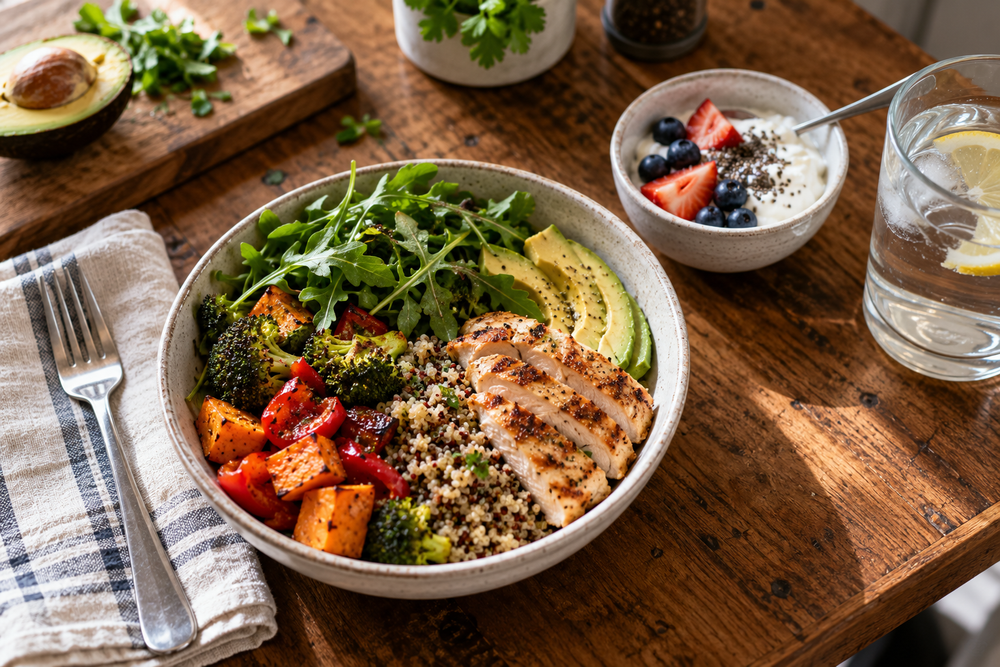
If you strength train regularly, you have probably heard conflicting advice about protein.
One person tells you to drink a shake immediately after every workout. Another tracks every gram they eat. Someone else insists that ordinary meals provide everything you need.
The practical answer is less dramatic.
Protein matters for building and maintaining muscle, but your total intake across the day generally matters more than chasing a perfect shake, food, or narrow timing window.
For healthy adults who exercise regularly, protein needs can be higher than the minimum needed by a sedentary adult. Research also suggests that increasing protein intake alongside resistance training can modestly support gains in lean mass and strength. However, more is not automatically better.
At V3 Fit Club in Highland Park, nutrition coaching is offered alongside personal training and lifestyle support. The stated approach emphasizes simple, sustainable guidance rather than gimmicks. That philosophy is useful here because protein does not need to turn every meal into a math problem.
Why Does Protein Matter When You Strength Train?
Resistance training gives your muscles a reason to adapt. Protein provides amino acids that your body uses in the processes involved in repairing and building muscle tissue.
The two work together.
A large systematic review and meta-analysis of resistance training studies found that protein supplementation produced modest additional improvements in muscle strength and fat-free mass during prolonged resistance training. Importantly, benefits did not simply continue increasing as total protein intake climbed indefinitely.
Another meta-analysis found that increasing daily protein intake may enhance gains in lean body mass among healthy adults participating in resistance exercise.
That does not mean protein alone builds muscle.
Training provides the stimulus. Nutrition helps support the adaptation.
So, How Much Protein Do You Actually Need? 🥩
There is no single number that is ideal for every person.
Your needs can vary with body size, training volume, age, overall calorie intake, goals, and health status.
For healthy people who exercise, the International Society of Sports Nutrition has reported that approximately 1.4 to 2.0 grams of protein per kilogram of body weight per day is sufficient for most exercising individuals who are trying to build or maintain muscle.
Research examining resistance training specifically has also found diminishing additional benefits as intake moves beyond roughly 1.6 grams per kilogram per day for gains in fat-free mass.
Those numbers are useful reference points, not a prescription for every V3 member.
For example, someone weighing 165 pounds is about 75 kilograms. Using 1.4 to 1.6 grams per kilogram would equal roughly 105 to 120 grams of protein per day.
That does not mean everyone weighing 165 pounds should immediately target that amount.
People with kidney disease or other conditions that affect dietary recommendations should discuss protein intake with their physician or registered dietitian rather than adopting a fitness-based target independently.
Do You Need to Track Every Gram?
For many recreational exercisers, probably not.
Tracking can be useful temporarily if you genuinely have no idea how much protein you eat. But it is not the only way to improve your nutrition.
A simpler strategy is to look at your meals.
Ask:
Does this meal contain a meaningful protein source?
That might include:
• Eggs
• Greek yogurt or cottage cheese
• Chicken or turkey
• Fish or seafood
• Lean meat
• Beans or lentils
• Tofu or tempeh
• Soy foods
• Milk or fortified soy alternatives
• Nuts and seeds as part of a balanced meal
USDA MyPlate recommends varying protein sources and includes seafood, meat, poultry, eggs, beans, peas, lentils, nuts, seeds, and soy products in its Protein Foods Group. Different choices provide different combinations of nutrients, so variety still matters.
Protein is important, but it should not push fruits, vegetables, whole grains, healthy fats, and other nutritious foods off your plate.
A Practical Protein Framework for a Busy Day 🍳
Instead of saving most of your protein for dinner, it can be easier to include a source at several eating occasions.
Here is a hypothetical example for a busy adult who trains after work.
| Time | Meal idea | Simple protein strategy |
|---|---|---|
| Breakfast | Eggs with whole grain toast and fruit | Build breakfast around eggs |
| Lunch | Chicken, grain, and vegetable bowl | Include a substantial lean protein source |
| Afternoon | Greek yogurt with fruit | Use a convenient protein-rich snack |
| Dinner | Salmon, potatoes, and vegetables | Center the meal around fish plus balanced sides |
This is only an example. A vegetarian version could use tofu, tempeh, beans, lentils, edamame, soy foods, dairy, eggs, or combinations of those foods depending on individual preferences.
The point is not to copy the menu exactly.
The useful habit is distributing protein-containing foods across your normal meals instead of realizing at 8 p.m. that almost everything you ate that day was low in protein.
Do You Need a Protein Shake After Every Workout?
No.
Protein shakes are convenient, but they are not mandatory.
If you finish a V3 workout and will eat a balanced meal containing protein relatively soon, you do not necessarily need to add a shake just because you exercised.
Research supports protein intake around resistance exercise, but the bigger picture still includes total daily intake. Studies comparing different protein supplementation strategies also show that the relationship between timing, protein type, muscle gain, and performance is more nuanced than a single mandatory post-workout window.
A shake may be useful when:
• You have little appetite after training.
• Your next meal is several hours away.
• Your schedule makes whole food inconvenient.
• You struggle to include enough protein through meals.
Think of protein powder as a convenience food, not a requirement for being serious about fitness.
V3’s own blog has previously shared a protein-based pre-workout drink recipe, so supplements are not foreign to its nutrition content. The key is putting them in context rather than treating them as essential.
Food First Does Not Mean Meat at Every Meal 🌱
Protein variety matters.
USDA guidance specifically includes plant sources such as beans, peas, lentils, nuts, seeds, tofu, tempeh, and other soy products.
You can therefore build protein-rich meals without eating chicken three times per day.
For example:
Breakfast could include eggs or Greek yogurt.
Lunch could use lentils, beans, chicken, tuna, or tofu.
A snack could include yogurt, milk, soy milk, or nuts alongside other foods.
Dinner could feature fish, lean meat, tempeh, beans, or another protein source.
Variety can make the routine easier to sustain and can broaden the nutrients your diet provides.
Four Protein Mistakes That Make Nutrition Harder Than It Needs to Be
1. Treating protein as the entire diet
Protein is important, but so are carbohydrates, fats, fiber, vitamins, minerals, and adequate total energy.
Your plate should still look like food, not a collection of supplements.
2. Assuming more always means better
Research does not support the idea that endlessly increasing protein produces endlessly increasing muscle growth.
Once your intake adequately supports your training and nutritional needs, adding much more may offer little additional benefit for muscle gain.
3. Obsessing over the post-workout window
You do not need to sprint from your final set to a blender.
Eating protein around training can be useful, but total daily intake and an overall sustainable eating pattern deserve more attention than an arbitrary countdown.
4. Changing everything at once
If your current breakfast is mostly coffee and your lunch regularly lacks a meaningful protein source, start there.
One useful nutrition change practiced consistently can be more manageable than attempting to rebuild your entire diet overnight.
Try This Simple Seven-Day Protein Check
Before tracking macros or buying supplements, spend one week observing your normal eating pattern.
At each main meal, ask:
- Is there an obvious protein source?
- Am I eating a variety of protein foods during the week?
- Am I relying heavily on one meal to provide most of my protein?
- Does my eating pattern support my training rather than leave me hungry or depleted?
- Is this routine realistic on my busiest days?
If several meals consistently lack protein, you have identified a practical place to start.
You can then make targeted changes rather than following a complete diet overhaul you may not need.
Where V3 Fit Club's Approach Fits
V3 Fit Club currently lists nutrition coaching as part of its broader coaching system. Its personal training service includes sustainable nutrition guidance alongside custom programming, progress tracking, and support for recovery, sleep, and stress.
That matters because nutrition rarely exists in isolation.
Someone who strength trains consistently but sleeps poorly, skips meals during busy workdays, and tries to compensate with supplements may need a different strategy from someone who already eats balanced meals but wants to fine-tune protein intake.
For V3 members, Nutrition Coaching at V3 Fit Club can provide a place to work through those habits alongside the training plan rather than treating food and exercise as unrelated projects.
Frequently Asked Questions
Is 100 grams of protein enough to build muscle?
It might be appropriate for some people and insufficient or unnecessary for others. Protein needs depend partly on body size, training, goals, total diet, and individual health considerations. A grams per kilogram framework is more useful than assuming one fixed target works for everyone.
Is animal protein better than plant protein?
Both animal and plant foods can contribute meaningfully to protein intake. Plant-based diets may require more deliberate variety and planning, but foods such as soy, beans, lentils, nuts, seeds, and other plant sources can all contribute.
Should I eat protein before or after strength training?
Either can fit into a good nutrition strategy. Research supports consuming protein around resistance exercise, but you do not need to obsess over a tiny timing window. Your overall daily intake remains important.
Do I need protein powder?
No. Protein powder can make meeting your needs more convenient, but it is not required if your normal diet already provides enough protein.
Make Protein Practical, Not Complicated
Protein deserves attention when you strength train, but it does not need to dominate your diet.
Start with the basics.
Include protein-rich foods across the day. Eat a varied diet. Train consistently. Use supplements for convenience when they genuinely help rather than because you feel obligated to take them.
And if you are unsure how your nutrition should support your training goals, explore V3 Fit Club Nutrition Coaching in Highland Park for guidance that can be considered alongside your training, recovery, and everyday routine.